
Find people, groups, projects, media, etc.
-

Clinical graduate research training

Updated: 28, Nov 2025

A wide range of research groups at the Doherty provide opportunities for clinicians to undertake graduate research.

These include areas ranging from basic virology, bacteriology, parasitology and immunology, pathogen genomics, antimicrobial resistance and antibiotic allergy, clinical trials, epidemiology, infections in pregnancy and public health. While the majority of our clinician graduate researchers are Infectious Diseases Physicians and/or clinical microbiologists, we also have allied health professionals undertaking research.

We offer local collaboration with the Victorian Infectious Diseases Service (VIDS), the Department of Infectious Diseases at the Austin Hospital, Clinical Microbiology at The Royal Melbourne Hospital, the Victorian Infectious Diseases Reference Laboratory (VIDRL).

Linkages are also available at The Walter and Eliza Hall Institute (WEHI), Peter MacCallum Cancer Centre and the Royal Women’s Hospital.
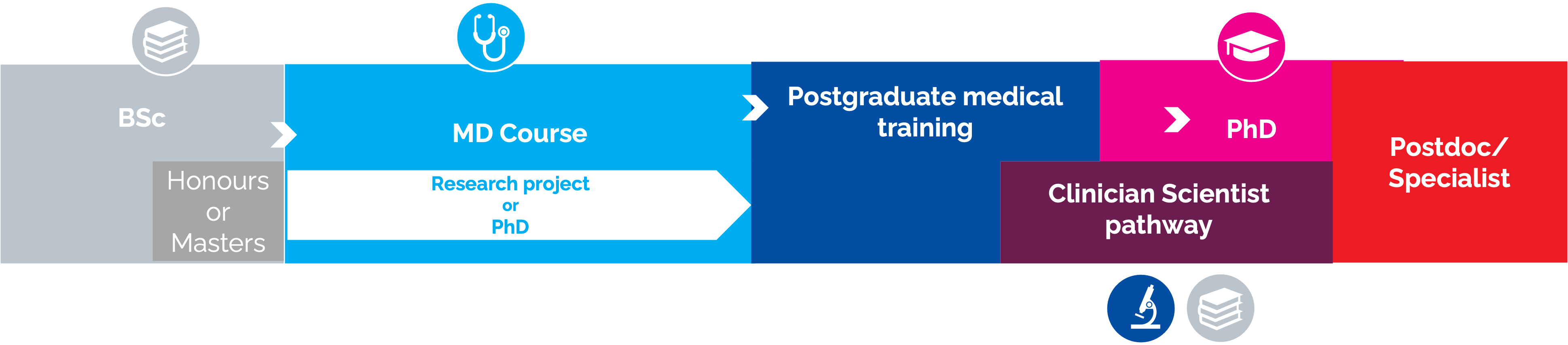
Clinical graduate research pathways

The Doherty Institute offers a range of training pathways for post graduate researchers and clinicians to gain skills and qualifications across our areas of work, including antimicrobial resistance, bacterial and parasitic infections, clinical and health systems research, computational science and genomics, discovery research, global health, immunology, Indigenous health, public health and viral infectious diseases.

Above is an overall outline of a clinician graduate research training pathway at the Doherty – this may vary on a case by case basis.

Above is an overall outline of a clinician graduate research training pathway at the Doherty – this may vary on a case by case basis.

Graduate Certificate in Infectious Disease Epidemiology

Doherty Institute Epidemiology is coordinating a Graduate Certificate in Infectious Disease Epidemiology through the University of Melbourne’s School of Population and Global Health.

The Graduate Certificate in Infectious Disease Epidemiology provides the baseline skills necessary to work in the field of infectious disease investigation, monitoring, reporting, decision making and research. Within this degree, students will learn to use surveillance data, investigate outbreaks, and analyse and interpret information from studies of infectious diseases.

Meet our graduate researchers

We asked our current graduate researchers to tell us about their research, explain why they chose to study at the Doherty Institute and also provide some advice to prospective PhD applicants.

Site by Sod