Overview
What is Buruli ulcer?
Buruli ulcer is a skin infection caused by a slow-growing bacterium called Mycobacterium ulcerans. It typically starts painlessly, presenting as a small area of redness or swelling on the skin. While Buruli ulcer is curable with antibiotics, if it’s not diagnosed and treated early, it can lead to large ulcers and long-term problems, including disability and cosmetic deformity.
This infection is considered a neglected tropical disease, meaning it affects vulnerable populations and hasn’t received as much research attention as other diseases. Buruli ulcer is now endemic in parts of Australia and during the last two decades there has been an exponential increase in reported cases in Victoria, escalating from 12 in 2003 to 363 in 2023. There are still critical gaps in our understanding of how M. ulcerans interacts with the human body, which has made it difficult to develop effective therapeutics to prevent it, like vaccines.
Introducing the MuCHIM project
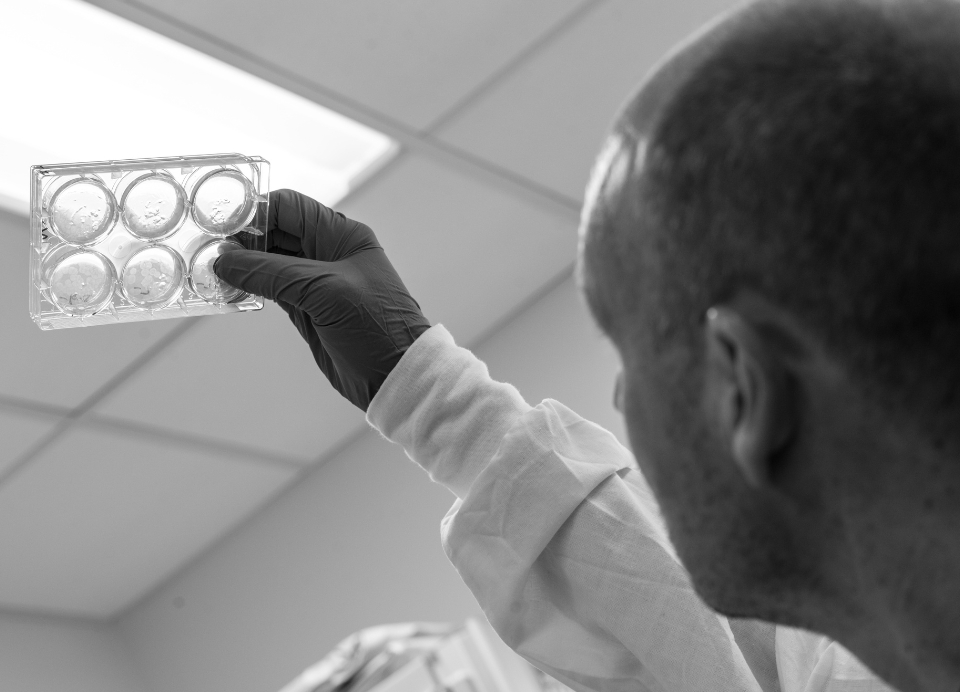
The Mycobacterium ulcerans Controlled Human Infection Model (MuCHIM) project led by the Doherty Institute (University of Melbourne, Australia), is a research initiative designed to help us learn more about Buruli ulcer in a safe and controlled way, and eventually to test vaccines and other prevention tools.
In the MuCHIM study, participants will receive a tiny, precisely measured dose of an isolated strain of Buruli ulcer bacterium (Mycobacterium ulcerans JKD8049), which has been chosen for its suitability and safety for this kind of research, especially at ultra-low doses. The infection is given via an injection just under the skin on the forearm.
Identifying the challenge isolate, M. ulcerans JKD8049, was a critical step in the MuCHIM research pipeline. It was selected following a rigorous screening process to ensure it met key criteria: susceptibility to all clinically relevant antibiotics, ease of preservation, genetic stability, and suitability for administration in ultra-low doses. Learn more about the study published in PLOS Neglected Tropical Diseases.
The main goals of this initial pilot study are:
- To confirm that it is safe and acceptable for healthy adult volunteers to be given a tiny, precisely measured dose of the Buruli ulcer bacteria, and that any resulting infection can be reliably cured with standard treatment.
- To determine the rate of infection by monitoring the small, localised infection in healthy volunteers.
We also aim to:
- Test less invasive ways to diagnose Buruli ulcer lesions.
- Study how the human immune system responds to the infection, especially in its early stages.
- Explore the specific characteristics of the M. ulcerans bacteria when it infects humans.
If this pilot study is successful, the long-term vision is to use this MuCHIM model as a platform to speed up the development and testing of much-needed therapeutics, like vaccines, for the prevention and treatment of Buruli ulcer. This could help people in Australia, where cases continue to rise and in other affected communities around the world.




 Public Health