The Victorian Infectious Diseases Reference Laboratory’s Electron Microscopy and Structural Virology Laboratory develops and integrates advanced imaging and 3-dimensional reconstruction methods for the diagnosis, reference, and research of infectious diseases.
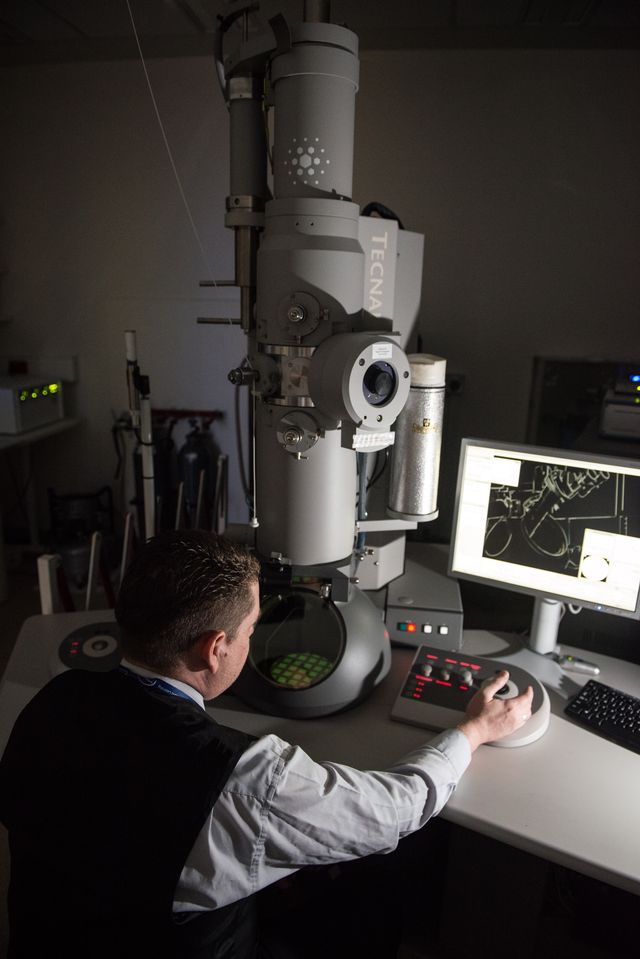
Located within the Doherty Institute, the Victorian Infectious Diseases Reference Laboratory’s FEI Tecnai G2 Spirit Transmission Electron Microscope (TEM) is dedicated to the examination of pathogens of public health significance. This advanced technology has proven critical in providing rapid, gold-standard morphological data during recent outbreaks, including SARS-CoV-2 and mpox, informing diagnostics and public health responses across Australia, and globally.
Our electron microscopy capabilities allow for magnification of specimens which is crucial for visualising and understanding the structures of viruses and other pathogens. This is a valuable resource in infectious disease diagnostics, public health response, and research, contributing significantly to our understanding and management of emerging pathogens.
The Electron Microscopy and Structural Virology Laboratory specialises in:
- High-resolution imaging of viral pathogens
- 3D reconstruction of virus structures
- Support for diagnostics, especially when conventional methods like PCR are inconclusive
- Novel pathogen identification and authentication of pathogens