

Find people, groups, projects, media, etc.
-
Go to homepage

About

Updated: 25, Nov 2025

Overview

The WHO Collaborating Centre for Mycobacterium ulcerans was created in 2001 and resides within the Mycobacteriology Reference Laboratory at the Victorian Infectious Diseases References Laboratory (VIDRL).

What is Buruli ulcer?

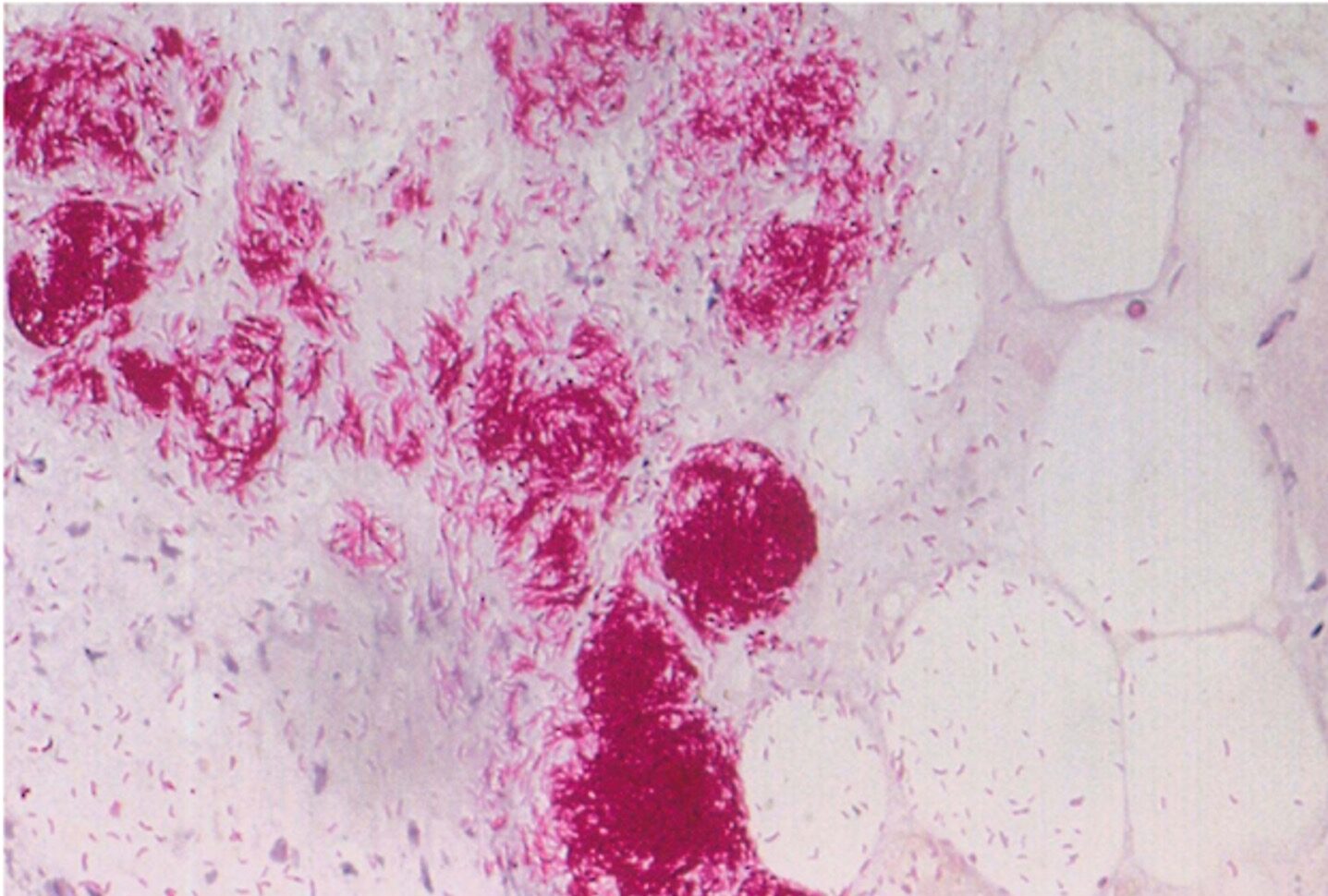
Buruli ulcer (also known as Bairnsdale ulcer) is an infection of skin and soft tissue caused by the bacterium Mycobacterium (M.) ulcerans. If the infection is left untreated, the toxin made by the bacteria kills fat cells under the skin, which leads to localised redness and swelling or the formation of a papule (raised area) or sometimes a nodule (lump), that can then break down as the infection progresses to form an ulcer.

Buruli ulcer is a zoonotic infection, that is, it is a disease spread from animals to humans. Australian research has shown that native possums are a major wildlife reservoir for M. ulcerans. Like humans, they can get Buruli ulcers, but they also shed the bacteria in the faecal material, in ‘possum poo’. Research teams have shown that in southeastern Australia, mosquitoes are spreading the infection from possums to humans.

A very informative and accessible web resource with information on Buruli ulcer diagnosis, treatment and prevention can be found here. This site is hosted and maintained by Professor Paul Johnson, the immediate past director of this collaborating centre.

Over the last few years Buruli ulcer cases have been increasing around Melbourne and Geelong. A link to the current epidemiological data collated by the Victorian Government Department of Health can be found here.

Resources

Our team

Professor Tim Stinear
Laboratory Head and Director of the WHO Collaborating Centre for Mycobacterium ulcerans
Ms Maria Globan
Laboratory Head – Mycobacterium Reference Laboratory (VIDRL)
Dr Katherine Bond
Head, Mycobacteriology Reference Laboratory, VIDRL
Caroline Lavender
Senior Scientist, Mycobacteriology Reference Laboratory, VIDRL
Professor Paul Johnson
Immediate Past Director
Research affiliates
Dr Stephen Muhi
Infectious Diseases Physician | Senior Research Fellow
Associate Professor Norelle Sherry
Deputy Director, Microbiological Diagnostic Unit Public Health Laboratory
Jessica Porter
Department of Microbiology and Immunology, Doherty Institute
Dr Andrew Buultjens
Department of Microbiology and Immunology, Doherty Institute

Terms of reference

  1. To perform molecular (PCR) and culture diagnosis of Mycobacterium ulcerans infection in humans and other animals for the Western Pacific Region.
  2. To perform genome sequencing on all new M. ulcerans isolates as an aid to epidemiological studies.
  3. To systematically record and report all cases of M. ulcerans infection in Australia to the relevant state and national health authorities, and cases occurring in other countries in the Western Pacific Region to the relevant local and national health authorities. All cases identified in the region reported to WHO.
  4. In conjunction with the relevant local Health authorities, to gather and map the likely geographic source of infection for all cases of Buruli ulcer in the Western Pacific Region.
  5. To continue expanding the Centre’s existing archive of isolates, histological specimens, genome sequences, for future reference and research and to continue sharing this resource with the worldwide network of M. ulcerans researchers.
  6. To continue to promote, facilitate and conduct outstanding M. ulcerans research in a range of areas between local, regional and international collaborators.
  7. To further develop expertise in environmental surveillance of M. ulcerans.
  8. To provide ongoing excellent laboratory and clinical support for the management and treatment of M. ulcerans infection in humans and animals, both within Australia and other countries within the Western Pacific Region where cases of M. ulcerans infection are diagnosed
  9. To provide training for scientists from developing countries in molecular and culture diagnosis of M. ulcerans infection in humans and animals.
  10. To communicate developments in the diagnosis, treatment and control of M. ulcerans infection in humans and animals to the medical, veterinary and scientific communities and the general public.
  11. To provide public advocacy designed to increase awareness both locally and internationally of this important neglected disease.
  12. To review these ToRs every two years.

Last reviewed: January 2024

Site by Sod