Written by Guest Contributor Sir Jeremy Farrar
As medical historian Roy Porter observed, every time we change the way we live, a new disease emerges. This insight has never felt more urgent than it does today, as I witness from my role at the World Health Organization how our interconnected world creates new vulnerabilities with each passing year.
The pandemics and epidemics we've witnessed over the last 25 years, and those inevitably to come, are not isolated events. They are symptoms of broader societal transformations that define our century: climate change, biodiversity loss, urbanisation, wildlife trade, and unprecedented global connectivity. Yet our response continues to search for silver bullets rather than embracing the integrated approach these complex challenges demand.
COVID-19 exposed a critical gap in our pandemic arsenal that we can no longer ignore. While vaccines ultimately proved transformative, they arrived too late to prevent the initial waves of devastation. Meanwhile, antiviral therapeutics, drugs that could have saved lives from day one, lagged woefully behind.
This isn't just a COVID-19 story. The lesson from HIV is instructive here. We still don't have an HIV vaccine after decades of effort, but we transformed that epidemic through therapeutics. We managed to change the nature of HIV from a death sentence to a manageable condition through sustained investment in drug development. Why haven't we applied this approach more broadly?
The answer, frankly, comes down to investment priorities. Where there's been massive commercial incentive – diseases of the rich world – we've seen remarkable progress. The development of antibody therapies for RSV has advanced significantly. But for viral infections affecting poorer populations or those with uncertain timing like pandemic threats, the market has failed us.
This is where the conversation must shift to what is fundamentally the role of government. Given the risk the world faces from influenza pandemics or other acute viral infections for which vaccines might prove difficult, developing therapeutics is about national resilience, national security, and protection of lives and the global economy.
Governments need to push this through their funding of science and through incentives they provide to industry to pull academic work into practical drugs. Philanthropy has a role: it can catalyse, take bigger risks, do things governments struggle with, but ultimately philanthropy isn't big enough to tackle this challenge alone.
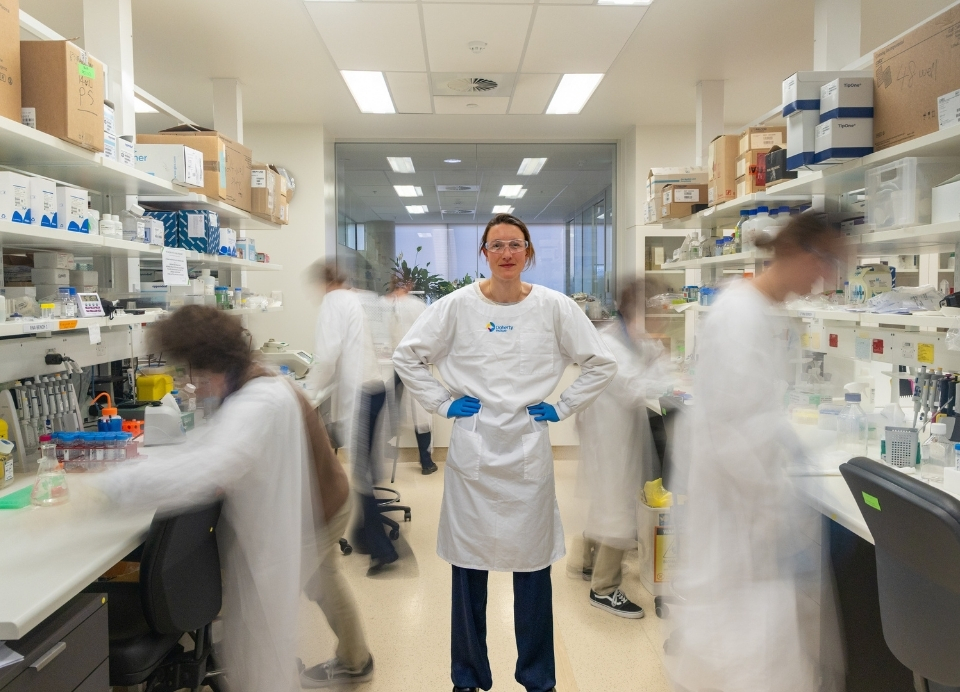
I'm encouraged by initiatives like the Cumming Global Centre for Pandemic Therapeutics in Victoria, Australia, jointly funded by the state’s government and through generous philanthropic support. What excites me most is how this centre is now linked into a global network we're building across Europe, Japan, Singapore, South Africa, the United States, Canada, and the UK.
Here's the critical insight from my experience through multiple health crises: what you have before a pandemic hits determines how you'll perform during it. If you don't have trust in your society at a reasonably high level when the pandemic arrives, you can't build that trust during the crisis. The same applies to vaccines, therapeutics, and evidence-based policy decisions.
The COVID-19 vaccines succeeded because they built on science spanning 20, 30, 40 years. The manufacturing capacity wasn't created during the pandemic, it was leveraged from existing capabilities. Countries with higher trust in institutions and science generally performed better.
This is why my plea isn't to think we'll deal with therapeutics when the next pandemic comes, but to ask what we need now that addresses day-to-day health issues while building capabilities we can leverage in a crisis. Build systems that work every Monday and every Tuesday, then scale them when extraordinary circumstances demand it.
We cannot rely on any single tool as our salvation, whether vaccines, therapeutics, or diagnostics. The future demands a much more holistic approach that includes understanding how people behave and respond to advice, evidence, and science, alongside our medical measures.
The epidemics and pandemics of the future will emerge from the same drivers we see today: climate change, biodiversity loss, urbanisation, and global trade. If we don't address these root causes, we'll continue seeing more outbreaks. It's not a question of if, but when.
Science has a role beyond developing drugs or vaccines. It can demonstrate that the world can still work together constructively when politics struggles to do so. At a time when one major country has chosen to withdraw from global health efforts, scientific collaboration becomes even more vital.
We cannot wait for the next pandemic to develop the drugs that will address it. The critical element is what we build now: the research networks, the manufacturing capabilities, the regulatory pathways, the public trust, and the international partnerships that will determine our response when crisis hits.
Sir Jeremy Farrar is Assistant Director-General, Division of Health Promotion, Disease Prevention & Care at the World Health Organization and former Director of the Wellcome Trust. His book “Spike” chronicles the early response to COVID-19 in the UK.
He recently appeared on Off Script, a podcast by the Cumming Global Centre for Pandemic Therapeutics.
More updates and news from the Doherty Institute


 Public Health