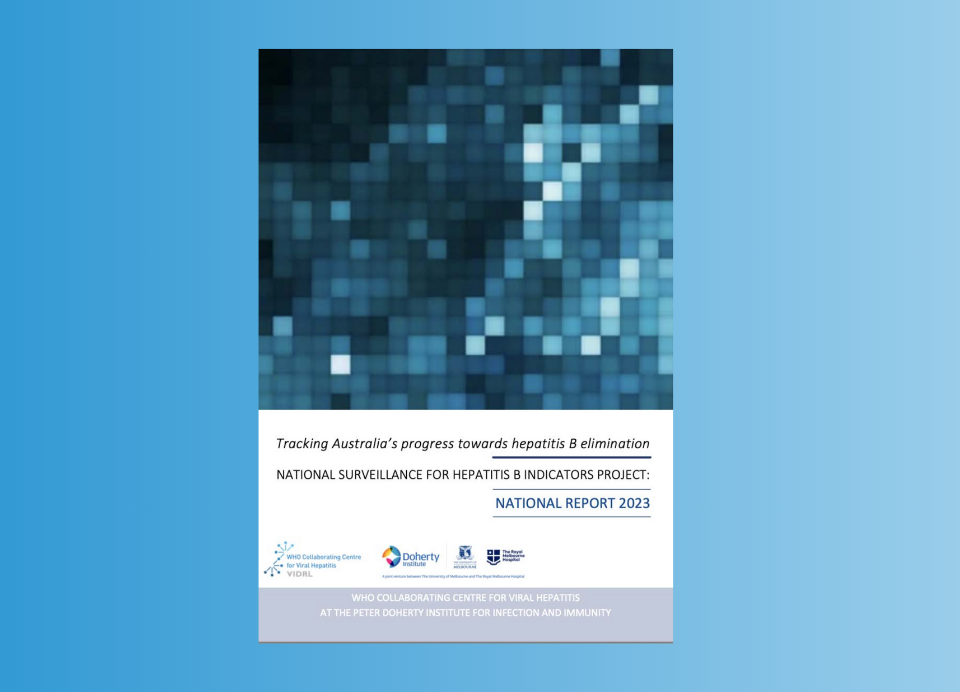
The National Surveillance for Hepatitis B Indicators Project 2023 report—developed by the WHO Collaborating Centre for Viral Hepatitis at the Doherty Institute and funded by the Australian Government Department of Health, Disability and Aged Care—provides a comprehensive overview of national progress and highlights areas requiring urgent attention.
Australia continues to make significant strides in addressing chronic hepatitis B, but critical gaps remain in diagnosis, care, and treatment. Chronic hepatitis B remains a major public health concern in Australia, as it is the leading cause of liver cancer, which ranks as the sixth leading cause of cancer death nationwide.
KEY FINDINGS AT A GLANCE
Prevalence: An estimated 220,000 Australians are living with chronic hepatitis B (0.82% of the population).
Diagnosis Gap: Only 69% of people living with hepatitis B have been diagnosed, leaving nearly 70,000 Australians unaware of their condition.
Treatment Shortfall: Just 13% of those living with chronic hepatitis B are receiving antiviral treatment, despite 30% being eligible.
Care Engagement: Only 25% of individuals living with chronic hepatitis B are engaged in regular care.
Mortality Trends: While treatment has halved hepatitis B-related deaths since 2010, mortality is rising again due to an aging population and persistent care gaps.
SUCCESS STORIES
The Northern Territory’s Hep B program has dramatically improved treatment uptake among remote Indigenous communities, offering a model for national expansion.
Using Person-Level Integrated Data Asset (PLIDA) enables more detailed analysis of individual-level care access, supporting more targeted interventions.
Australia has made commendable progress, but to meet the 2030 elimination targets, further efforts are needed to: improve diagnosis, expand access to care and treatment, and address disparities across jurisdictions and priority populations, including Aboriginal and Torres Strait Islander Peoples. This is key for hepatitis B in Australia, as people born overseas and Aboriginal and Torres Strait Islander peoples are disproportionately impacted, representing three-quarters of the total affected.
The full report and presentation of the data are available to download and view below.
Visit the WHO Collaborating Centre for Viral Hepatitis website for further information on their chronic hepatitis B surveillance and research program, which includes the National Surveillance for Hepatitis B Indicators Project and the National Hepatitis B Mapping Project.
More updates and news from the Doherty Institute

 Public Health