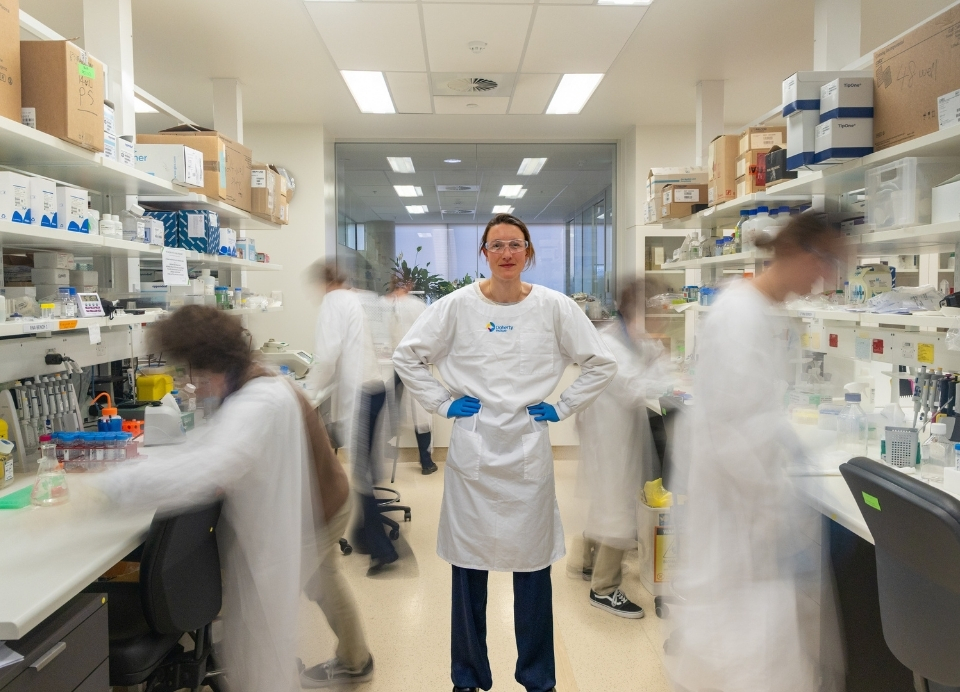
The World Health Organization’s (WHO) new Global Antibiotic Resistance Surveillance Report 2025 paints a stark picture: in 2023, roughly one in six laboratory-confirmed bacterial infections worldwide were resistant to antibiotics, with a growing reliance on ‘last-resort’ medications.
Participation in WHO’s Global Antimicrobial Resistance and Use Surveillance System (GLASS), the source of data for the 2025 Report, has improved more than threefold since 2016, with 104 countries submitting data in 2023. GLASS provides a standardised approach to collection, analysis and interpretation of antimicrobial resistance (AMR) data. Data is collated and submitted by national focal points in each country, then analysed at regional and international levels, providing data to inform policies and responses to AMR.
In the Western Pacific region, it is estimated that one in eleven laboratory-confirmed bacterial infections were resistant to antibiotics. On face value and comparable to the global figures, this appears positive. However, the fact of the matter is coverage in our region remains sparse, with data reported from only 37 per cent of countries (10 of 27). These apparent ‘low’ AMR rates likely reflect missing data rather than lower risk. Countries including Australia and Japan, with higher surveillance coverage and lower AMR rates, may be masking important trends within the region.
Limited surveillance capacity often coincides with higher underlying risk as health systems with fewer resources face inequity with diagnostics, infection prevention and control, and antimicrobial stewardship programs. This combination may be driving both resistance and bias in data, as the sickest patients are those most likely to be tested.
Filling these gaps is a public-health imperative and Australia, as a regional leader, has a critical role to play.
A Victorian success story
When Victoria detected a large outbreak of carbapenemase-producing Enterobacterales (CPE), a group of bacteria resistant to last-line antibiotics, in the mid-2010s, the State mounted a coordinated response. This centred around robust case finding and screening, integrated pathogen genomics, centralised epidemiology, strong infection prevention and control, and antimicrobial stewardship measures. The Microbiological Diagnostic Unit Public Health Laboratory (MDU PHL) at the Doherty Institute became pivotal to this centrally-coordinated CPE surveillance system. MDU’s ‘search-and-contain’ program curbed local transmission and became a model for end-to-end surveillance and response that continues today.
Australia’s hospitals are already managing more complex infections in patients due to bacteria with critical AMR, and overseas acquisition remains the most common risk factor. Predicting and detecting AMR importation, including in returning travellers, is essential to prevent establishment and spread of AMR within Australia’s healthcare system.
Our best defence is to treat AMR as a regional challenge and continue to invest accordingly in shared surveillance, shared data and shared solutions.
Turning regional partnerships into regional protection
The WHO Collaborating Centre for AMR at the Doherty Institute works with partners across the Asia-Pacific to strengthen national AMR action plans, build laboratory and genomic capacity, improve prescribing, and implement sustainable surveillance systems.
In a world of decreasing global health funding, the Australian Department of Foreign Affairs and Trade (DFAT) continues to prioritise addressing AMR, particularly through the Partnerships for a Healthy Region initiative. Through the Doherty Institute’s DFAT-funded Strategic Partnership for prevention, surveillance and response to infectious diseases across the Indo-Pacific, Australia is prioritising AMR with investments in workforce development, laboratory strengthening, genomic surveillance and data for decision-making.
With the annual World AMR Awareness Week (18–24 November), we reflect on the Doherty Institute’s key progress and achievements across our region in building capacity to address AMR:
Australia’s protection from AMR is contingent on the strength of our regional network. The lesson from Victoria is clear: a unified response across surveillance, genomics, stewardship and strong infection, prevention and control is vital to counteract AMR. The priority now is sustained, region-wide investment and interoperable systems that detect and contain threats early.
Treating AMR as a collective security risk is how we will prevent avoidable harm within Australia, while supporting resilient health systems across the Asia-Pacific.
Written by Dr Rod James, Medical Microbiologist at MDU-PHL and Director of Clinical Services at Guidance Group / NCAS at the Doherty Institute, and Tilda Thomson, Genomic Epidemiologist at the Doherty Institute, for the WHO Collaborating Centre for AMR.
More updates and news from the Doherty Institute




 Public Health