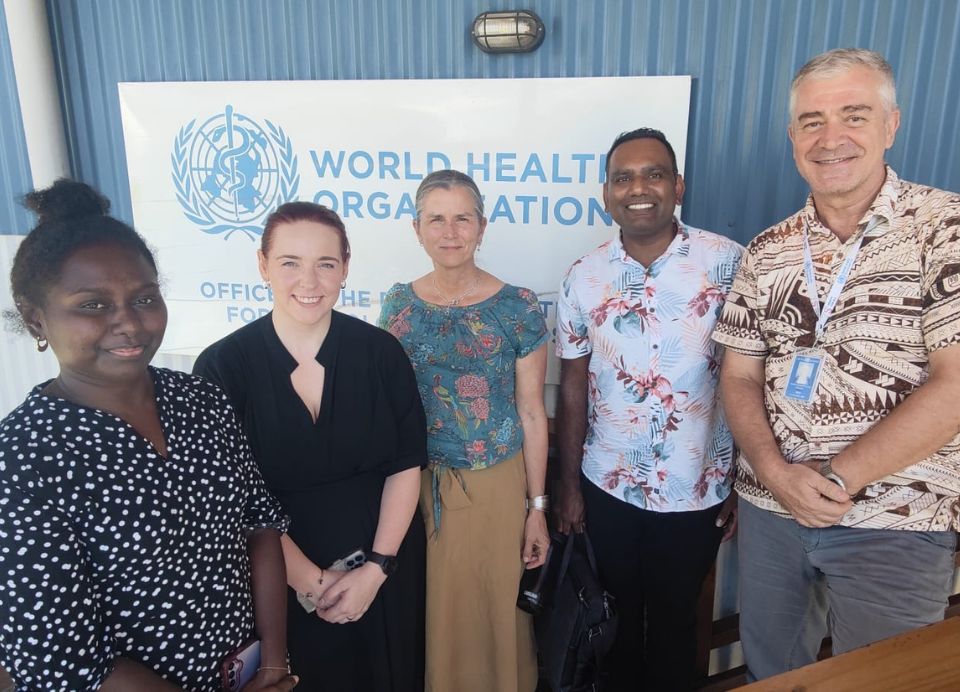
In a joint effort to bolster the Solomon Islands' efforts towards triple elimination of mother-to-child transmission of HIV, syphilis, and hepatitis B, as well as enhance laboratory capacity for infectious disease diagnosis, two Doherty Institute programs recently conducted scoping visits in Honiara.
The HiT3 (Hepatitis B Integration into Triple Elimination) program, led by the WHO Collaborating Centre for Viral Hepatitis , aims to provide technical support for integrating hepatitis B prevention into existing triple elimination programs. In April, HiT3's Senior Clinical Advisor Dr. Nicole Allard and Strategic Advisor Eliza Copsey met with key stakeholders, including the Ministry of Health and Medical Services, WHO, KOICA, UNFPA, SIPPA, and World Vision.
These meetings assessed the progress towards integration of hepatitis B into triple elimination efforts, including through surveillance, testing, funding mechanisms, strategic plans, clinical guidelines, and referral pathways. The team identified opportunities to support the development of strategic plans, redevelop referral pathways and clinical guidelines, strengthen surveillance and outbreak response, and increase workforce capacity, including at the new Naha Birthing Centre.
Concurrently, the eLABorate (Enhancing Laboratory Accuracy and Biosafety for Outbreak Response in the Asia-Pacific through Education) program co-leader, Navin Karan, consulted with key Ministry of Health personnel, including the National Laboratory Services, NRH Hospital Laboratory, Honiara City Area Health Centre, and the Solomon Island National Medical Stores. The eLABorate program led by the Victorian Infectious Diseases Reference Laboratory, aims to strengthen laboratory capacity and systems for infectious disease diagnosis, with a focus on molecular and serological testing capabilities.
In collaboration with the Director of Laboratory Services, Mr. Alfred Dofai, eLABorate identified key areas of focus, including revising laboratory operational documents, strengthening sample referral pathways, procuring critical reagents for priority pathogens like HIV, hepatitis B, and hepatitis C, and providing ongoing technical and programmatic advice to operationalise laboratory strategies and priorities.
Both programs, supported by the Australian Department of Foreign Affairs and Trade through the Doherty Institute’s Strategic Partnership for prevention, surveillance and response to Infectious Diseases across the Indo-Pacific regionlook forward to strengthening engagement with local partners in the Solomon Islands. By supporting the achievement of viral hepatitis and triple elimination goals, enhancing laboratory capacity, and ensuring better care for pregnant women through stronger clinical referral pathways and timely treatment, these initiatives aim to make a significant impact on public health in the region.
More updates and news from the Doherty Institute



 Public Health