Find people, groups, projects, media, etc.
-

10 years of research, collaboration and action: NCAS shaping the future of antimicrobial use

Updated: 8, Feb 2026

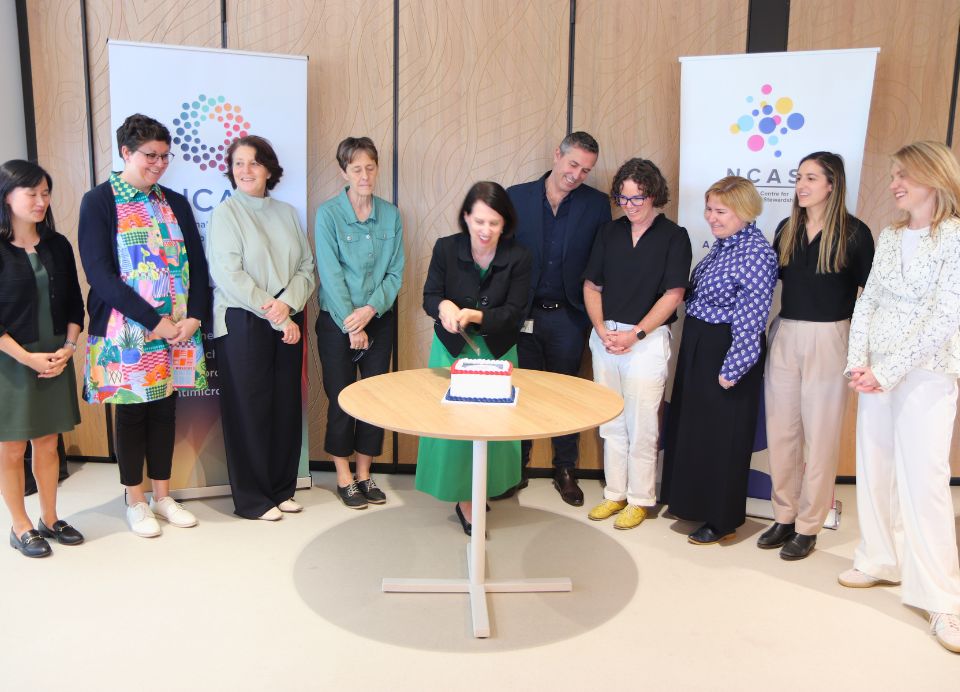
2025 marked a significant milestone for the National Centre for Antimicrobial Stewardship (NCAS), which celebrated 10 years of operation as a health services research program at the Doherty Institute. The Institute aims to advance antimicrobial stewardship across Australia and influence practice and policy worldwide.

Established in 2015 as an NHMRC Centre of Research Excellence, NCAS has become the leading national organisation using health services research to support the effective design and implementation of antimicrobial stewardship programs across human and animal health.

Antimicrobial stewardship ensures antibiotics and other antimicrobial medicines are used safely and appropriately – the correct drug, at the proper dose, for the right duration and only when truly needed. By preventing unnecessary or incorrect use, stewardship slows antimicrobial resistance, protects patients (including animals) from avoidable harm and preserves the effectiveness of these vital treatments for future generations.

The Royal Melbourne Hospital’s Professor Karin Thursky, Director of NCAS at the Doherty Institute, reflected on the ten-year journey and its significance.

“This anniversary is a reminder of a decade of incredible dedication, collaboration and national impact. NCAS has transformed how stewardship is understood and practised across Australia and we are only just getting started,” said Professor Thursky.

NCAS has pioneered new research, developed a world leading national surveillance system, informed clinical guidelines and led stewardship improvements across human and animal health sectors. It promotes a One Health approach by bringing together clinicians, veterinarians, microbiologists, epidemiologists, pharmacists, nurses, general practitioners, data scientists and public health experts with a shared goal to maintain the future effectiveness of antimicrobials.

10 years of national and global influence

Over the past ten years, NCAS has delivered measurable impact across Australia’s health and veterinary systems. Key achievements include:

  • Advancing Australia’s position as a global leader in One Health antimicrobial stewardship
  • Building Australia’s leading national antimicrobial stewardship research network
  • Influencing national policy, accreditation standards and stewardship guidelines
  • Leading pioneering research on prescribing behaviour across hospitals, aged care, community care, general practice and veterinary practice
  • Developing national surveillance datasets that shape clinical and policy decision-making
  • Expanding the National Antimicrobial Prescribing Survey (NAPS) across all sectors with implementation in 12 countries
  • Strengthening stewardship programs in tertiary hospitals, aged care, primary care, veterinary systems, and agriculture
  • Training a new generation of stewardship leaders, researchers and clinicians

A foundation built on research, collaboration and practice change

Much of NCAS’s influence comes from its ability to design research that translates directly into action. From the launch of the National Antimicrobial Prescribing Survey (NAPS), a multi-disciplinary program led by NCAS at the Doherty Institute, the centre has played a central role in raising the standard of antimicrobial use across Australia.

The Royal Melbourne Hospital’s Dr Rod James, Director of Clinical Services – Guidance Group and NCAS, reflected on this impact.

“The reach of NCAS programs demonstrates real-world change. We’ve built tools and evidence that prescribers across Australia rely on every day, strengthening safe and effective antimicrobial use nationwide,” said Dr James.

NCAS has consistently worked across hospital networks, aged care, primary care and veterinary practice to ensure that antimicrobial stewardship is practical, supported and tailored to the needs of each sector.

“We have also brought stewardship to life across every corner of the health system, equipping hospitals, aged care services and community clinicians with the data, guidance and confidence to prescribe responsibly,” he added.

Looking ahead: the RADAR–1H era

An event held at the Royal Melbourne Hospital (RMH) last November to mark the 10-year celebration also introduced the new NHMRC Centre of Research Excellence, RADAR-1H, dedicated to redesigning stewardship in a rapidly evolving digital era.

Professor Thursky highlighted that the project’s emphasis is leveraging the learning health system framework to optimise antimicrobial prescribing. The Centre brings new expertise in clinical informatics and AI, human factors and implementation science.

“Our collaborative model, across research, clinical practice and implementation, is what makes NCAS unique. The next decade will push stewardship further, powered by digital innovation and a stronger-than-ever One Health approach.”

Across its first decade, NCAS has proven that meaningful stewardship change requires partnership, evidence and a commitment to practical solutions that work in the real world.

“As we honour a decade of achievement and the people who have driven it, we remain deeply committed to safeguarding antimicrobial effectiveness, strengthening stewardship practice and supporting health systems across Australia and beyond,” said Professor Thursky.

Site by Sod