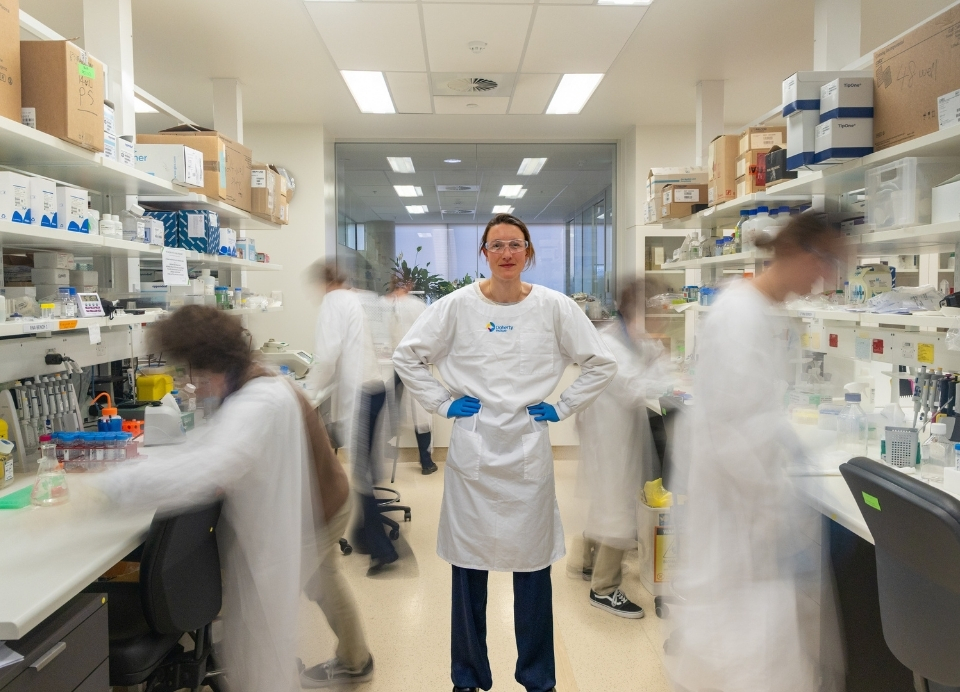
By Aira Cabug, PhD Candidate in Professor Katherine Kedzierska’s Laboratory at the Doherty Institute
Getting the flu can range from a mild inconvenience, perhaps just a sniffle and a couple of days off work, to a more severe experience that may result in hospitalisation or even death. When we first get sick and develop symptoms, like a headache or sore throat, it’s hard to predict how serious the illness might become.
We know that some people are more at risk of developing severe illness because of underlying health problems, pregnancy or age. But beyond that, we still do not have a clear understanding of why some develop life-threatening respiratory disease while others recover quickly. It’s like standing at a fork in the road without a map.
Our research team is working to shed light on this uncertainty and understand what drives such different outcomes in people infected with severe respiratory viruses.
In our latest study, published in Nature Communications, we focused on the H7N9 avian influenza virus, which first emerged in China in 2013. This virus, capable of infecting humans and causing life-threatening disease, had a mortality rate of over 35 per cent. Our goal was to get a deeper understanding of how the immune systems of patients hospitalised with H7N9 influenza differed between those who recovered and those who died.
In collaboration with Professor Jianqing Xu and his team from Fudan University in China, we analysed blood samples collected from hospitalised H7N9 patients upon admission, to identify potential early markers, or ‘biomarkers’, of severe disease outcomes.
We found that patients who later died from H7N9 had high levels of a gene called IL18R1 when they were admitted to the hospital. Normally, IL18R1 helps immune cells by picking up alerts that warn them of danger and trigger a response.
Our findings showed that high levels of IL18R1 on immune cells, especially killer T cells (known as CD8 T cells), were associated with more severe influenza infections and other respiratory viral infections like RSV and COVID-19. This suggests that IL18R1 could serve as an early indicator of severe infection, helping clinicians identify which patients are at a higher risk of dying.
Ultimately, we hope that understanding IL18R1 and its role in the immune response can help guide treatment and map out the road to recovery from severe respiratory viral infections.
More updates and news from the Doherty Institute


 Public Health