Written by the University of Melbourne’s Dr Jieru Deng, Postdoctoral Research at the Doherty Institute
Despite advances in medicine, many infectious diseases remain incurable. Now, our team has uncovered a critical piece of the puzzle: how the immune system senses bacteria. A discovery that could pave the way for effective vaccines and therapies for many diseases.
Our immune system works like a defence army, with battalions working together to protect the body from disease. T cells are a group of soldiers defending us against viral and bacterial infections. Among them, there is a special squad known as MAIT cells. These act as rapid frontline soldiers fighting infections.
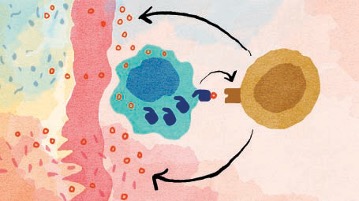
However, MAIT cells need to be given a clear “message” to operate. This message is delivered by a molecule called MR1. MR1 works by picking up “chemical messages” from bacteria and relaying them to MAIT cells. But MR1 needs a “courier” cell to mediate between bacteria and MAIT cells. Until recently, we didn’t really know which cells delivered the MR1 message.
Peer review: Deng & Yan, et al. Macrophage MR1 antigen presentation promotes MAIT cell immunity and lung microbiota modulation. Science (2025). DOI: 10.1126/science.adr6322
Collaboration: This work is the result of a collaborative effort between the Doherty Institute, Bio21 Molecular Science and Biotechnology Institute, the University of Melbourne, the University of Queensland, La Trobe University and Nantes University.
Funding: This work was supported by the National Health and Medical Research Council (NHMRC), the CASS Foundation, and the Australian Research Council (ARC).
We discovered that macrophages, a type of immune cell, are these “couriers” that transmit messages from bacteria to MAIT cells and the immune system. This activates the immune system and helps our body stay in balance with the good bacteria that live within us (forming the microbiota) while protecting us from dangerous bacteria. Using advanced tools, we show that macrophages carry the highest amount of MR1. By using glowing “chemical messages” we showed that macrophages were the most efficient cells at picking messages and to use this to engage MAIT cells to fight infections.
This discovery is important because MAIT cells can rapidly “switch on” powerful immune responses. By understanding how macrophages control this process, this discovery paves the way for better vaccines and treatments.
More updates and news from the Doherty Institute



 Public Health