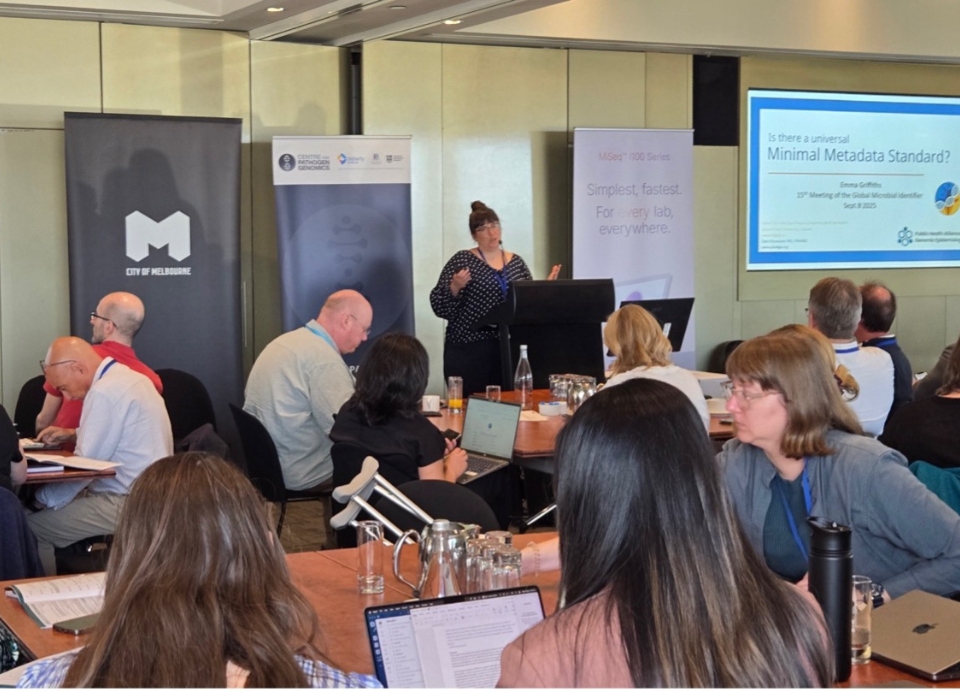
The Centre for Pathogen Genomics, at the Doherty Institute, hosted the 15th Global Microbial Identifier (GMI15) conference in Melbourne, Australia, from September 8–10, 2025. Co-convened by the University of Melbourne’s Tuyet Hoang, Portfolio Manager for Pathogen Genomics at the Doherty Institute, and Associate Professor Torsten Seemann, Lead Bioinformatician at the Doherty Institute, GMI15 brought together a diverse and dedicated global community, including international experts, policymakers, bioinformaticians, frontline lab scientists and data stewards to tackle the most pressing challenges in microbial genomics data sharing.
The program focused on collaborative problem-solving, with a clear objective to transition from identifying existing gaps to co-creating innovative and equitable solutions to support genomics implementation and data sharing globally.
Sessions were organised around five key themes: Data Platforms, Standards and Infrastructure; Enabling Tools, Applications and Platforms; Interoperability of Surveillance Ecosystems; Data Sharing: Benefits, Equity, Challenges and Platforms; and Navigating Policy and Legislative Environments. Underpinning these themes were the overarching principles of One Health, sustainability and national perspectives on implementation.
The event featured a mix of panel discussions, with each including a diverse range of perspectives. A key highlight was the Bioinformatics Workshop by International Pathogen Surveillance Network (ISPN), which provided a dedicated forum to move beyond theoretical discussions and develop concrete, actionable solutions to persistent challenges facing pathogen genomics networks. Two student networking sessions were also held to nurture the next generation of leaders and ensure that the GMI community and its mission remain relevant and sustainable.
The consensus emerging from the meeting was clear: the future of microbial genomics surveillance relies not only on technological advancements, but on strategic investments in people and infrastructure.
While the capacity to sequence has accelerated dramatically – especially following the pandemic, attendees stressed that the real global bottleneck now is a lack of capacity to analyse and interpret genomic data for public health action. It is therefore imperative to shift focus towards actively building and sharing this expertise on a global scale. Another major barrier identified was the precarious nature of funding, particularly in public health genomics, where programs face substantial budget cuts. Participants emphasised the urgent need for stable, sustainable funding models to support the critical work of national reference centres in routine surveillance and rapid outbreak responses.
The momentum and insights gained in Melbourne will fuel the GMI community’s work over the next year, setting the stage for continued progress at GMI16 in Tunis, Tunisia.
For those who missed out or who wish to revisit sessions, recordings from the meeting can be accessed on GMI15.org.
Acknowledgements
The Centre for Pathogen Genomics extends its sincere thanks to all the speakers, participants, chairs and facilitators who contributed their expertise and passion to make GMI15 such a resounding success. They would also like to acknowledge the tireless work of the Organising Committee: Rukie de Alwis, Timothy Dallman, Celeste Donato, Adrian Egli, Emma Griffiths, Benjamin Howden, Lisa Ioannidis, Dhamari Naidoo, Adriano Di Pasquale, Sonia Sia and Masami Takeuchi, along with the exceptional dedication of the Centre for Pathogen Genomics staff involved in event logistics.
This important event would not have been possible without the support of event sponsors, Illumina and The City of Melbourne.
Travel funding was provided by the Public Health Alliance for Genomic Epidemiology (PHA4GE) and the Association of Public Health Laboratories (APHL). This dedicated support was crucial for ensuring strong representation from low- and middle-income countries and regions often underrepresented in global meetings.
More updates and news from the Doherty Institute





 Public Health