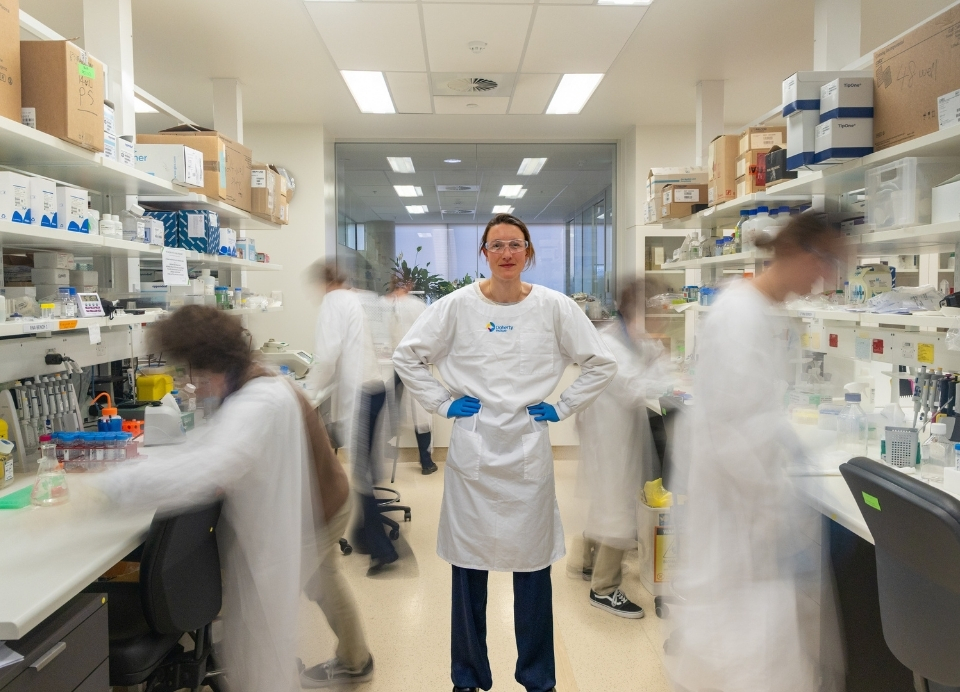
Imagine in the early months of the COVID-19 pandemic, being able to pick up an effective therapeutic nasal spray at your local pharmacy to treat early infection and minimise symptoms.
That’s the aim of Dr. Wei Zhao and his team at the Doherty Institute – they want to develop an easily accessible early treatment therapeutic for respiratory viruses.
“Effective therapeutics arrived nearly two years after the initial outbreak of COVID-19. We want people to be able to access effective treatments early on, so we’re using advanced technology with the aim of revolutionising viral treatment,” said Dr Zhao.
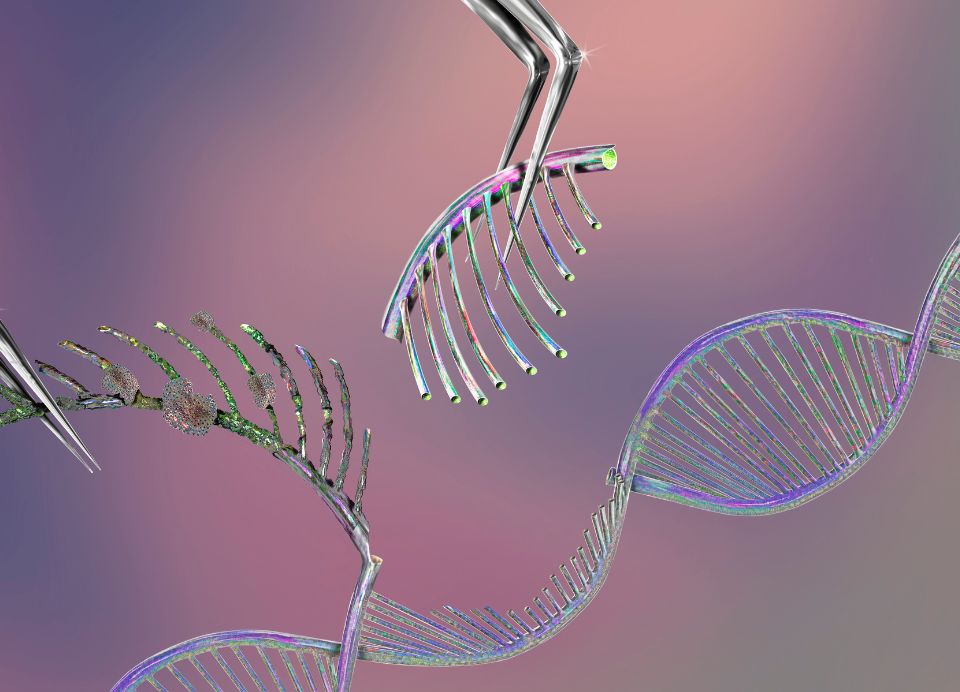
Viruses are made up of viral proteins encoded by genes, and Dr. Zhao's team is targeting these virus genes using an advanced gene editing tool called CRISPR-Cas13.
Based on the CRISPR-Cas9 technology that received the Nobel Prize in 2020 for its ability to edit the human genome by targeting DNA, CRISPR-Cas13 is an advanced version of the technology that specifically targets RNA – which makes it effective against many respiratory viruses.
Dr. Zhao says the impressive new technology can be easily adjusted to address viral mutations quickly, effectively addressing new viral threats as they emerge.
“We're developing a platform technology using a gene editing tool to specifically destroy the genetic code of respiratory viruses,” Dr. Zhao said.
“What makes this approach specific is that it needs a guide sequence. When a new strain emerges, we can very quickly target the updated sequence – similar to how mRNA vaccines can be adapted. As long as we have a genetic sequence we can adapt it to any emerging virus very quickly.”
“Our vision is to create a readily available, single-application antiviral to treat or prevent infection from respiratory viruses, of pandemic potential” Dr. Zhao said.
Ideally, the team will produce an antiviral that could be delivered in multiple ways including nasal spray for early treatment, and intravenous administration to target infections deeper in the respiratory tract.
An easily available nasal spray would be a game-changer and is a key focus of the project: “We're looking to use lipid nanoparticles for intranasal delivery, which goes straight to the virus replication site to accurately deliver the therapy directly to the infection,” Dr. Zhao said.
Successful therapies developed using the CRISPR-Cas13 technology would also have potential applications across all respiratory viruses, including the common cold.
Dr. Zhao is confident about the potential success of this project: “We’re bringing together world-class experts from different disciplines – virology, immunology, mRNA research and technology – to create something the world has never seen before.”
Project title: Developing CRISPR Cas 13 antiviral therapeutics for respiratory pathogens of pandemic potential
Chief Investigator: Dr Wei Zhao
Co-Investigators: Professor Sharon Lewin, Dr Mohamed Fareh, Dr Stanislav Kan, Dr Matthew McKay, Dr Robert De Rose, Professor Kanta Subbarao, Dr Bang Tran, Dr Rhiannon Werder, Dr Zhiwei Chen and Dr Danielle Anderson.
Spotlight on Therapeutics: This content series profiles the projects and people behind the Cumming Global Centre for Pandemic Therapeutics innovative research.
More updates and news from the Doherty Institute



 Public Health