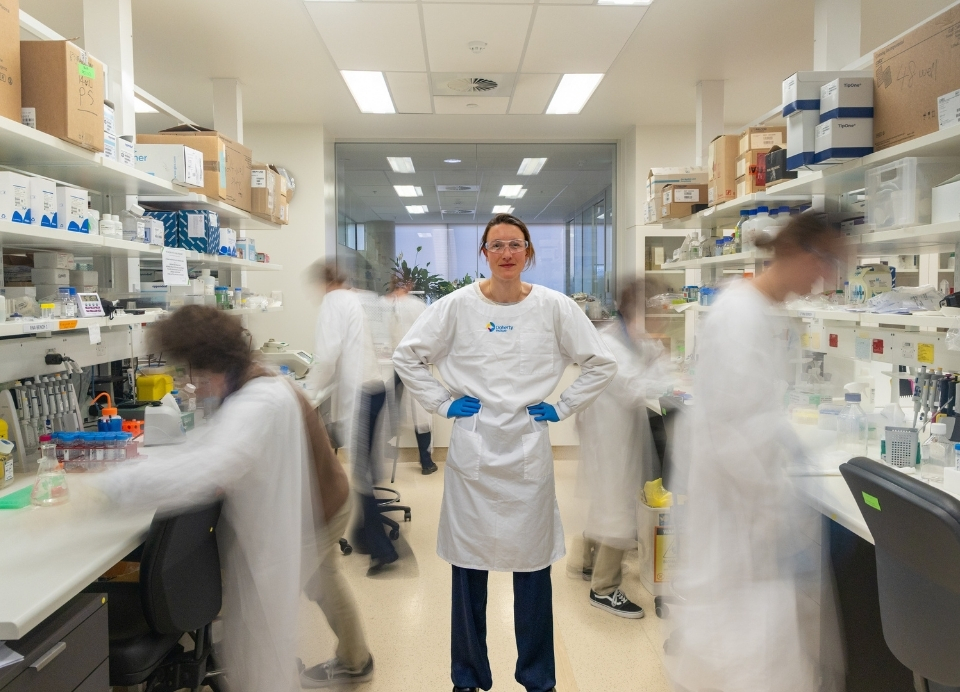
Experts from the Doherty Institute’s National Centre for Antimicrobial Stewardship, including Dr Rod James and Professor Karin Thursky have co‑authored a major Review in Nature Reviews Microbiology that sets out practical, equity‑focused steps to help curb antimicrobial resistance (AMR) across human, animal and environmental health sectors.
Dr Rod James:
“In September 2024, the United Nations General Assembly urged member states to take urgent, accelerated action on AMR through a One Health approach, emphasising the optimisation of antimicrobial access and use. Here, we recognise and address implementation challenges, especially in low‑resource settings.”
Framing antimicrobial stewardship (AMS) within a One Health framework, the authors call for coordinated action on governance, financing, surveillance and behaviour change, especially in low‑ and middle‑income settings where the AMR burden is highest. The Review advocates for equity‑focused strategies that better account for structural barriers, support marginalised populations, and ensure global access to high‑quality antimicrobials.
The article distils what an effective AMS program looks like in practice. A driver–and–enablers map (Figure 1, p. 3) highlights rising resistance, antimicrobial access, financial pressures and environmental contamination on one side, and policy, regulation and technological innovation on the other. A complementary core‑components heat‑map (Figure 2, p. 6, displayed below) demonstrates where evidence for AMS measures, such as policy, leadership, education, decision support, audit and feedback, and outcome tracking is strongest across hospitals, aged care, primary care and animal health.
Crucially, the authors urge health systems to measure not only the quantity of antimicrobial use, but how appropriately they are prescribed. They point to Australia’s Hospital National Antimicrobial Prescribing Survey, (developed by the Royal Melbourne Hospital’s Guidance Group) which found that while 55.9% of prescriptions were concordant with national guidelines, 74.2% were assessed as clinically appropriate. Digital health and artificial intelligence feature as promising accelerators, supporting real‑time decision‑making, surveillance and reporting, provided tools are validated across diverse settings and designed for equity and interoperability from the outset.
The authors state that there is no single AMS model that meets the requirements of all nations, health systems or sectors, emphasising the need to adapt interventions to local epidemiology, infrastructure and sociocultural realities. They end with stating – “What is now needed is the political will and adequate, sustained funding to embed AMS in everyday workflows of clinical care, food production and environmental safety.” A final table (Table 3, p. 11) maps the major gaps and challenges in AMS across human, animal, and environmental domains and pairs each with targeted, practical recommendations. Its intent is to guide coordinated, One Health–aligned policy, funding, surveillance, training, and evaluation by tying specific problems to implementable solutions.
Professor Karin Thursky:
“What we have demonstrated is that there is inequity in resources and ability to implement AMS globally. All countries should consider addressing the drivers for adoption as a key priority”
As a WHO Collaborating Centre for AMR, we welcome these recommendations and will continue partnering with health services, veterinarians, policymakers and communities to translate them into action, particularly in our capacity building efforts in low- and middle-income countries within the Asia-Pacific region.
Peer review: James R., Hardefeldt L.Y., Ierano C., Charani E., Dowson L., Elkins S., & Thursky K. Antimicrobial stewardship from a One Health perspective, Nature Reviews Microbiology, 2025. https://doi.org/10.1038/s41579-025-01233-3
More updates and news from the Doherty Institute




 Public Health