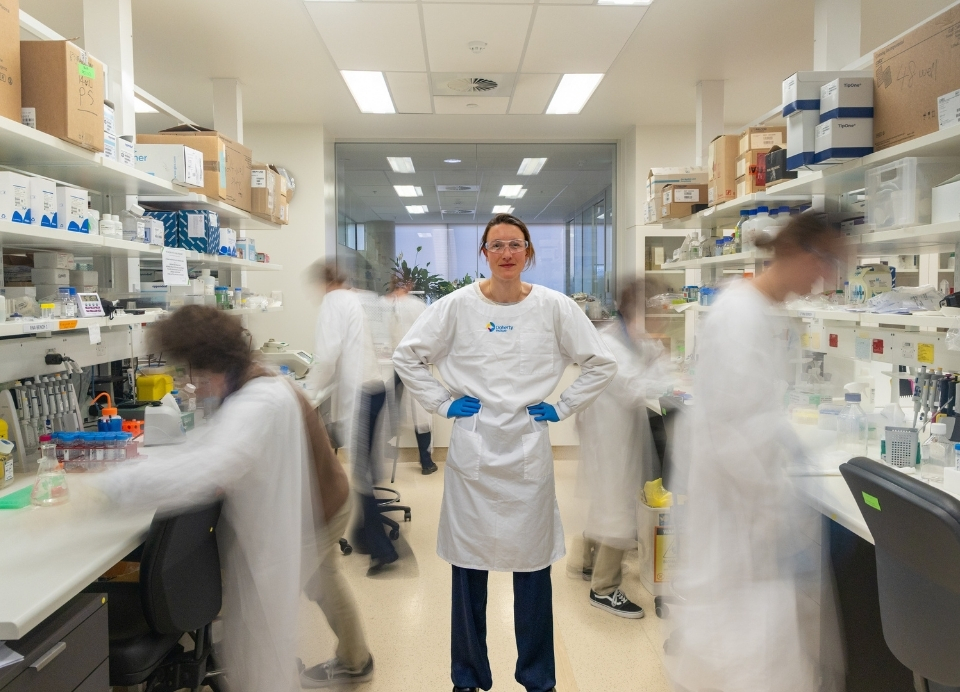
Throughout 2025, the Doherty Institute’s Strategic Partnership with the Australian Government’s Department of Foreign Affairs and Trade (DFAT) through the Partnerships for a Health Region Initiative, gained significant momentum in delivering country-led progress towards improving communicable diseases detection and control, stronger coordination, and defining a shared vision across South East Asia and the Pacific.
The South East Asia and Pacific regions experience frequent infectious disease outbreaks, rising antimicrobial resistance (AMR), and growing pressures from climate change. Many countries have limited surveillance systems, workforce shortages, and fragmented health structures, making early detection and rapid response difficult. COVID-19 highlighted these gaps and the need for stronger, more connected systems.
Professor Patrick Reading, Technical Director for the Strategic Partnership, said: “The objective is to strengthen infectious disease prevention, surveillance, and response across Southeast Asia and the Pacific, working with our national counterparts.”
The $12.5 million Strategic Partnership unites five key programs – eLABorate , COMBAT-AMR, BRIDGe, HIT3, and SPARKLE.
Furthermore, in July 2025, the Strategic Partnership was granted an additional $600,000 to support Fiji’s HIV response, specifically to drive collaboration to support critical improvements in testing, treatment, and health system integration through updated referral pathways, to ensure communities have better access to timely, high-quality care.
Genomics is transforming how we detect, track, and respond to infectious diseases, and the Doherty Institute is helping lead the way through BRIDGe. In Fiji, 2025 marked a major milestone with the launch of the Genomic Sequencing Laboratory at Fiji Centre for Disease Control and the first Genomic Surveillance Strategy Workshop, which set priorities for pathogens such as antimicrobial resistance, HIV, and Dengue. Wet lab whole genome sequencing (WGS) training was also completed to strengthen national AMR surveillance.
In Malaysia, protocols for Tuberculosis and Salmonella genomic surveillance pilots were completed, alongside WGS training at the National Public Health Laboratory. Meanwhile, at the Research Institute for Tropical Medicine (RITM), collaborative workshops are shaping a unified approach to genomic surveillance in the Philippines including a pilot project for near-real-time CPO surveillance and hands-on end-user capacity building.
In 2026, the BRIDGe team will continue to support in-country development of genomic surveillance strategies through stakeholder consultation, strengthening laboratory expertise in genomics, bioinformatics and genomic epidemiology, and build genomic literacy among public health end users. The team will be working closely with national partners to develop and implement pilot projects that embed into routine public health surveillance.
AMR is a growing global health concern, and the Doherty Institute is working with partners across the Indo-Pacific to strengthen prevention and AMR surveillance systems through COMBAT-AMR.
The program is supporting the establishment of national AMR surveillance in Fiji, with the development and endorsement of the national AMR surveillance framework a key achievement of the year.
In Cambodia, three Networks of Practice have been set up to foster knowledge exchange and mentoring in data and surveillance, clinical stewardship, and AMR laboratory diagnostics. A national workshop was hosted in Cambodia, bringing together diverse groups to discuss how to enhance the surveillance of AMR pathogens across the country.
In Papua New Guinea, the program worked with a major hospital to create simple, consistent routines that help keep patients safe through improved infection prevention practices and hand hygiene.
The program supports a multi-sectoral approach to addressing AMR. In Samoa, the team is working with the Ministry of Agriculture and Fisheries to support animal health diagnostics and testing.
In 2026, the COMBAT-AMR program will strengthen its collaborations with all in-country partners through the delivery of in-person training, practical workshops and the development and implementation of pilot projects to address AMR. The COMBAT-AMR team look forward to building upon the achievements of 2025, including supporting partners in Fiji to implement the national AMR surveillance framework as a routine surveillance program.
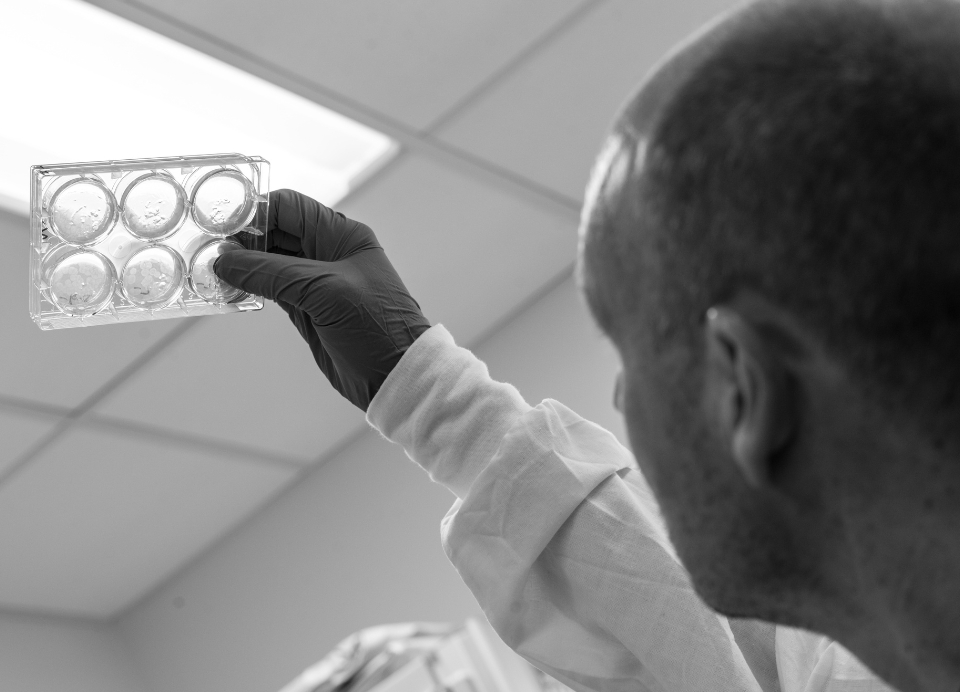
Laboratory health systems continue to be the backbone of public health systems and clinical management of patients through accurate, reliable and timely detection and reporting. Systems strengthening has been critical in responding to disease outbreaks faced by our regional partners in 2025, including HIV, dengue, and whooping cough. In its inaugural year, the eLABorate project – delivered by the Victorian Infectious Diseases Reference Laboratory (VIDRL) at the Doherty Institute, focused on strengthening clinical and public laboratories through in-country bench training for serology and molecular diagnostics in Fiji and the Solomon Islands. This capacity-building initiative includes regular touch points with country colleagues and regional stakeholders to support laboratory activities including quality assurance and laboratory policies. The program has offered technical assistance in streamlining procurement processes and collaborated with national, regional, and international partners to ensure laboratories are adequately equipped to respond to outbreaks and surges in testing requests.
eLABorate further responded to the HIV outbreak declared by the Fiji Ministry of Health and Medical Services with enhancing capacity for diagnosing and monitoring HIV and other coinfections. Support provided has included verification of new tests supporting early detection and diagnosis, point of care decentralisation review of key diagnostic strategies and algorithms, supporting clinical management and public health efforts.
In 2026, the eLABorate will extend its reach to Kiribati and Vanuatu, while continuing to strengthen partnerships and advance workplan delivery in Fiji and the Solomon Islands. This expansion will accelerate the development of national capacity and expertise in infectious disease diagnostics, significantly reducing the need for overseas referrals. Anchored in the principles of sustainability and inclusivity, the program will empower regional laboratory health systems, foster long term resilience, and drive improvements in population health—supporting better outcomes for all.
HiT3 is supporting partner countries across the region to integrate hepatitis B into existing Triple Elimination frameworks, working towards elimination of vertical transmission of HIV, syphilis, and hepatitis B, a critical step toward healthier futures for families. In Cambodia, national guidelines for clinical management of hepatitis B were updated between March and June 2025.
In Fiji, the program is working with the Ministry of Health and Medical Services to develop implementation plans, strengthen testing policies, and map data flows through antenatal care so pregnant women, mothers and their newborns can easily access all the services they need. The program is also providing additional support to the Fijian Government in response to their declared outbreak in HIV, through updating of referral pathways and improving linkage to care for key populations. The program is primarily focusing on reducing vertical transmission through improved antenatal and paediatric pathways, and maintaining continuum of care between divisional and subdivisional teams.
In the Solomon Islands, work has focused on supporting the HIV/STI Unit with identifying a national plan that sets the direction for preventing these infections, including updating relevant guidelines and supporting stakeholders, following a situational analysis in April 2025.
The program has also supported Vanuatu to update its National Strategic Action Plan for HIV, STI and Viral Hepatitis 2026-2030, and update hepatitis B and C clinical guidelines, through facilitation of a strategic workshop hosted by the Ministry of Health in November 2025. After their endorsement, these updates will enable Vanuatu to strengthen health systems across BBV/STI and enable further reduction of vertical transmission, supporting them on the path to Triple Elimination validation.
In 2026, the program will continue to support partner countries through identified program areas, particularly in Fiji and the Solomon Islands, together with linked work programs to manage ongoing outbreaks of HIV in the Pacific. HiT3 will continue engagement with Cambodia, and undertake work planning to strengthen local Triple Elimination programs.
Strengthening preparedness for infectious disease threats requires more than technology; it depends on knowledge sharing and collaboration. In Papua New Guinea, SPARKLE is working with STRIVE-PNG to develop evidence-generation questions and case studies aimed at improving malaria management at local, subnational, and national levels. The team also contributed to the PNG Medical Symposium and a One Health workshop to align program capabilities with local priorities.
In Thailand, two virtual professional development seminars were delivered for the SPARKLE Early to Mid-Career Researchers Network, building skills and capacity. SPARKLE is also collaborating with OUCRU to scale up the Malaria Hero Game regionally (an educational malaria game that teaches health workers and communities about prevention), with plans to expand into Indonesia.
In Indonesia, a codesign workshop adapted infectious disease modelling curriculum for a planned training in Papua province, ensuring alignment with policy priorities and cultural context. SPARKLE has been enhancing modelling capacity by funding in-country researchers, adapting infectious disease modelling curricula to local contexts, and linking policymakers with modelers to improve decision-making.
In 2026, a joint working group between SPARKLE collaborators in Indonesia and Papua New Guinea will advance the climate agenda in Papua through broader research on the role of climate change in the transmission of malaria, while also continuing to strengthen and maintain partnerships with counterparts in Thailand.
In 2025, the Doherty Institute partnered with Fiji’s Ministry of Health and Medical Services to deliver DFAT-funded technical assistance aimed at boosting the country’s HIV outbreak response. The program focused on improving diagnostic capacity with updated testing protocols and hands-on training for healthcare workers.
Beyond diagnostics, the team worked to map and standardise referral pathways, reducing delays between testing and treatment and ensuring patients receive timely care. The program undertook a jointly-funded workshop with ASHM focused on national HIV guidelines and referral pathways development in December 2025, supported by the Fiji Government and the Kirby Institute, to strengthen and plan for Fiji’s ongoing HIV response into 2026 and beyond. This workshop also incorporated sessions on laboratory strengthening, including development of national testing algorithms, and associated procurement planning. Facilitated by the Doherty Institute and Fiji HIV/SRH Diagnostics team, an additional day was allocated for national laboratory consultation across the private and public sector. This workshop focused on reviewing and refinement of national diagnostic strategy and quality assurance program for HIV, Blood Borne Viruses and STIs, and finalisation of an implementation plan for 2026.
For more information, please see the attached article here: Strengthening Fiji’s HIV response through shared expertise and regional collaboration | Doherty Website
More updates and news from the Doherty Institute



 Public Health