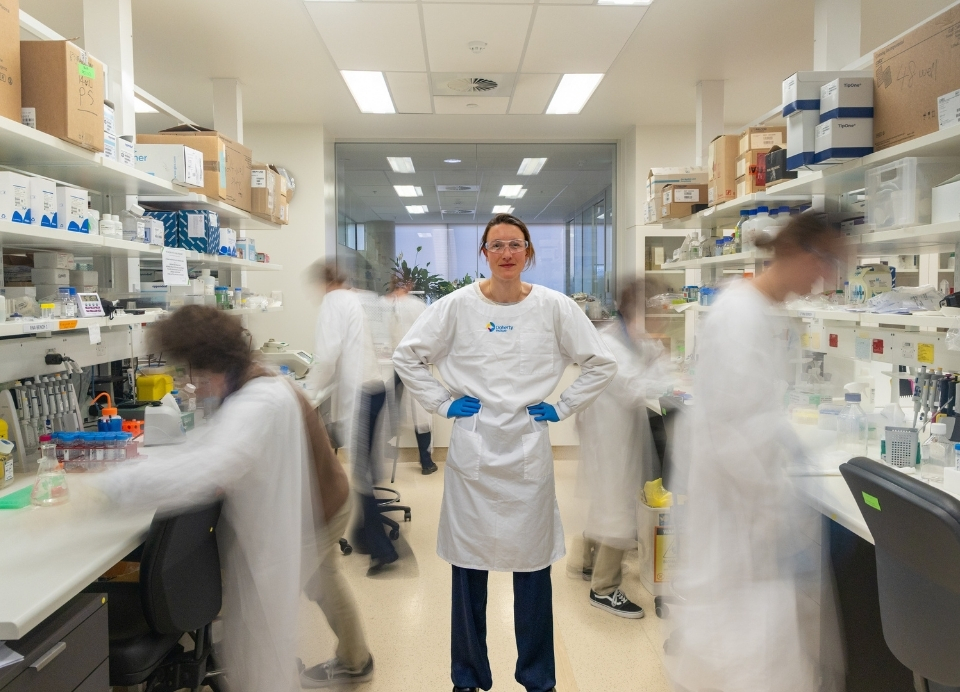
Nine Doherty Institute–led projects have been awarded $12.9 million through the National Health and Medical Research Council’s (NHMRC) Ideas Grants scheme supporting innovative research from early discovery through to practical solutions.
The highly competitive funding will support research spanning antimicrobial resistance, tuberculosis, HIV, cancer immunology and fundamental immune biology, advancing new approaches to preventing and treating infectious diseases, cancer and immune-related conditions.
Together, they reflect the Institute’s strength in translating molecular and genomic discovery into future therapies with global impact.
NHMRC CEO Professor Steve Wesselingh said: “Innovation in health and medical research is the driving force behind so many past discoveries that have helped shape our healthcare system.
“By empowering our researchers to pursue their bold ideas and collaborate with others, we strengthen the sector’s ability to tackle complex health challenges.”
Deciphering the molecular architecture of the pneumococcal manganese transport for new therapeutics | $1,350,540
University of Melbourne’s Professor Christopher McDevitt, Laboratory Head at the Doherty Institute, working with Professor Megan Maher and Associate Professor Jeffrey Harmer (Australian Institute for Bioengineering and Nanotechnology), will investigate how manganese, an essential trace element, is scavenged by the pneumonia-causing bacterium Streptococcus pneumoniae during infection. This research aims to leverage these new insights to develop a novel antimicrobial therapeutic strategy that blocks this pathway and prevents disease.
A VRE concerning threat: unravelling the mechanisms of daptomycin resistance and spread in Enterococcus faecium | $1,494,516
Antimicrobial resistance is also the focus of a major project led by the University of Melbourne’s Senior Research Fellow, Dr Glen Carter, alongside Dr Claire Gorrie, Dr Ian Monk, Associate Professor Jason Kwong and Dr Sara Vogrin. Their work will unravel how Vancomycin-Resistant Enterococci (VRE), a type of common gut bacteria (Enterococcus) already resistant to the powerful antibiotic vancomycin, develops resistant to last-line antibiotic daptomycin and how these highly resistant strains spread.
Decoding TB susceptibility and its genomic link to ageing and chronic disease | $1,635,122
Another project, led by the University of Melbourne’s Associate Professor Sarah Dunstan Principal Research Fellow, with Dr Xuling Chang, Dr Rajkumar Dorajoo, Associate Professor Thuong Nguyen and Dr Chiea Chuen Khor, will explore the genetic factors influencing the risk of tuberculosis (TB). The team will also investigate whether there is a genetic link between TB and chronic diseases such as heart disease and cancer.
Deciphering and targeting of transcriptional drivers of T cell exhaustion | $1,695,923
The University of Melbourne’s Dr Daniel Utzschneider, a Laboratory Head, has received funding for two complementary studies. Working with Dr Jan Schroeder, one project aims to overcome the functional limitations of T cells and restore their ability to effectively protect us from chronic diseases such as cancer.
Balancing self-renewal versus differentiation to promote T cell responses in chronic infection and cancer | $1,037,708
In a second grant, Dr Daniel Utzschneider will work with Dr Annika Poch to investigate the mechanisms driving T cell exhaustion and develop therapies that restore their function, offering improved and longer-lasting immune responses and enhanced disease control.
Understanding and harnessing the role of IFNg in metastatic lymph nodes | $1,841,107
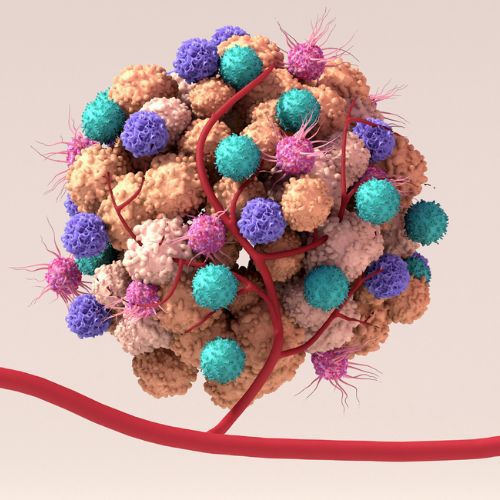
The University of Melbourne’s Professor Thomas Gebhardt, Senior Research Fellow, will study how the immune system can fight skin cancer that has started to spread in the body. Focusing on lymph nodes, early sites of cancer spread, the project will examine how the immune molecule IFNγ can be used to better control metastatic disease, with the goal of harnessing these responses to improve cancer treatment.
Reversing local corruption of metastatic lymph nodes: a novel approach to advanced cancer treatment | $1,363,480
The University of Melbourne’s Dr Harry Horsnell, Research Officer, working with Professor Veronika Lukacs-Kornek (The University of Bonn), will explore how to reverse immune suppression in metastatic lymph nodes, aiming to develop new treatments for advanced cancer.
Understanding the function of activating KIR | $1,266,327
The University of Melbourne’s Professor Andrew Brooks, Head of Department of Microbiology and Immunology, with Dr Philippa Saunders and Dr Jan Petersen (Monash University), will study how natural killer immune cells help regulate the development of arteries that supply nutrients to the growing foetus, focussing on the molecular signals involved in how these cells interact with the developing placenta.
Leveraging mRNA and lipid nanoparticle technology to develop a cure for HIV | $1,228,575
The University of Melbourne’s Dr Michael Roche, Senior Research Fellow, and Dr Paula Cevaal, Research Fellow at the Doherty Institute, will leverage mRNA and lipid nanoparticle technology to “wake up” hidden HIV in long-lived cells and trigger their destruction, with the goal to eliminate HIV infected cells and potentially allow people to stop antiviral therapy.
Further information on the 2025 Ideas Grants projects on the NHMRC website: https://www.health.gov.au/ministers/the-hon-mark-butler-mp/media/280-million-towards-innovative-health-and-medical-research
More updates and news from the Doherty Institute



 Public Health